The Architect’s Intuition vs. The Algorithm: Moving Beyond Visual Hallucinations
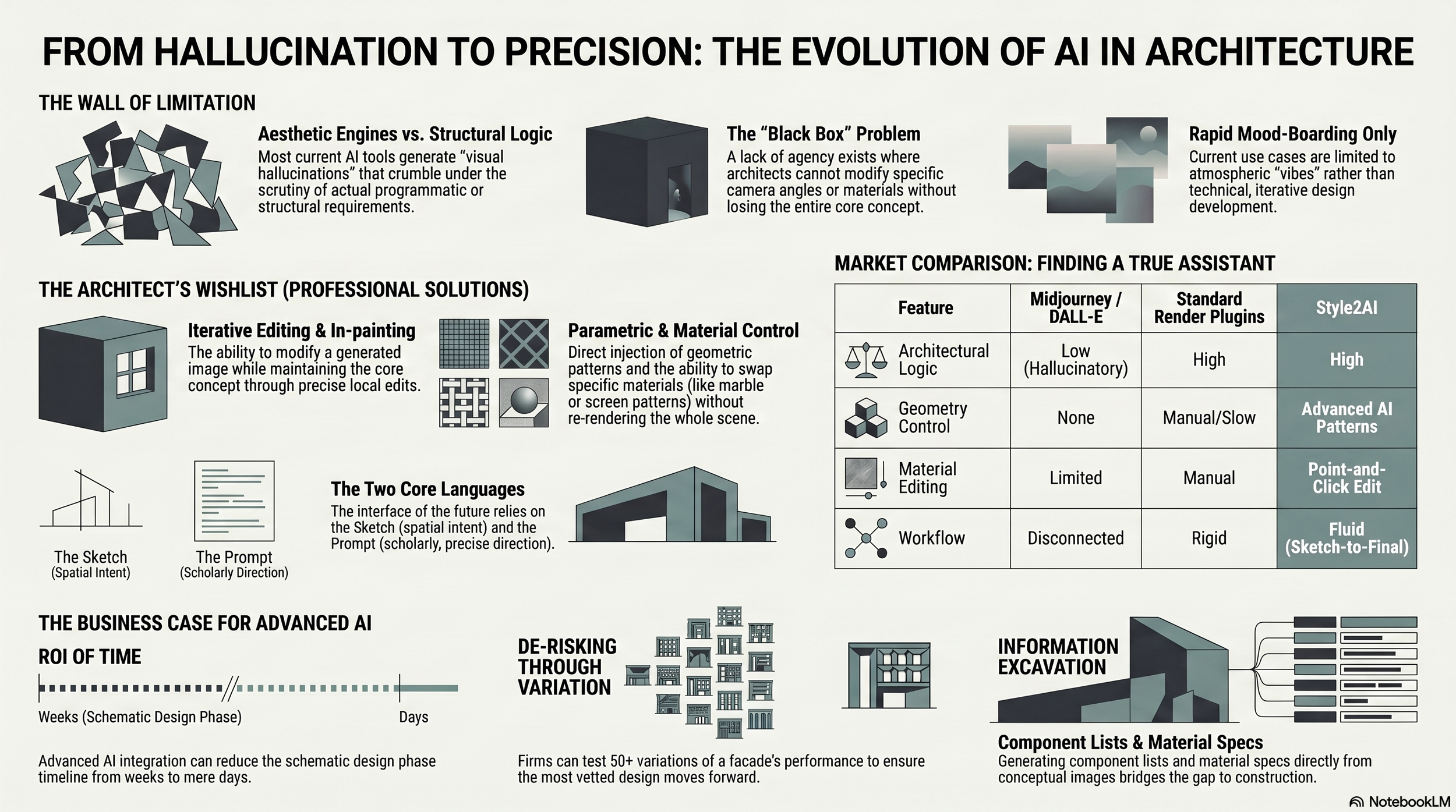
In three decades of practice, I have watched the "tools of the trade" evolve from the tactile resistance of a 6B pencil on tracing paper to the clinical precision of a BIM model. Today, we are witnessing the most disruptive evolution yet: the integration of Artificial Intelligence.
However, there is a profound gap between what the current market offers and what a professional architect actually needs. Most "AI for Architecture" tools today are little more than aesthetic engines, generating stunning images that often crumble under the scrutiny of structural logic or programmatic requirements.
The Current AI Landscape: Capabilities and the "Wall of Limitation"
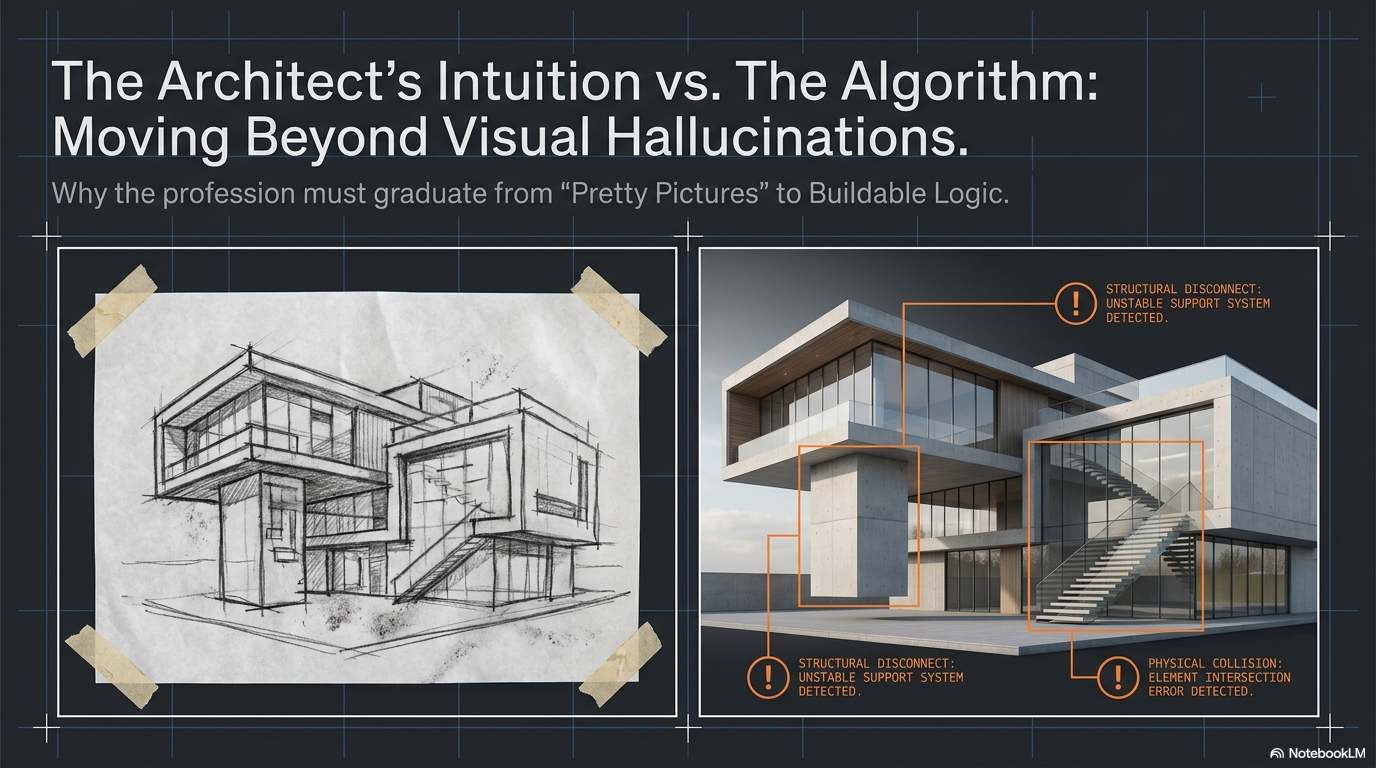
At present, architects are primarily using AI for:
Rapid Mood-Boarding: Generating atmospheric "vibes" for client meetings.
Stylistic Exploration: Testing how a massing might look in "Neo-Brutalist" versus "Contemporary Persian" styles.
Simple Visualization: Turning a 2D floor plan into a quick (but often inaccurate) 3D perspective.
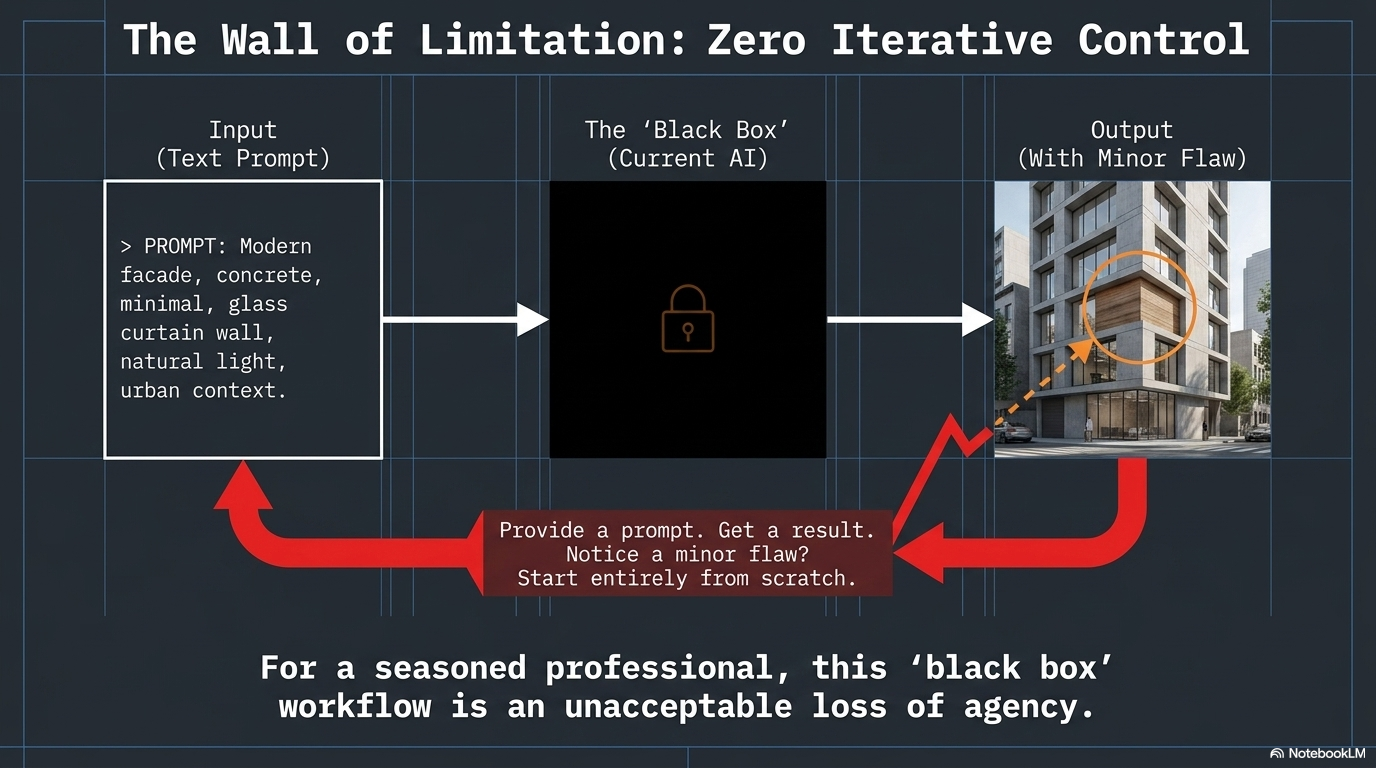
The Limitation: The "wall" most architects hit is the lack of control. These tools are essentially "black boxes." You provide a prompt, and it gives you a result. If the camera angle is slightly off, or if you love the facade but hate the material on the third floor, you often have to start from scratch. For a seasoned professional, this is an unacceptable loss of agency.
The Architect’s Wishlist: What We Actually Need
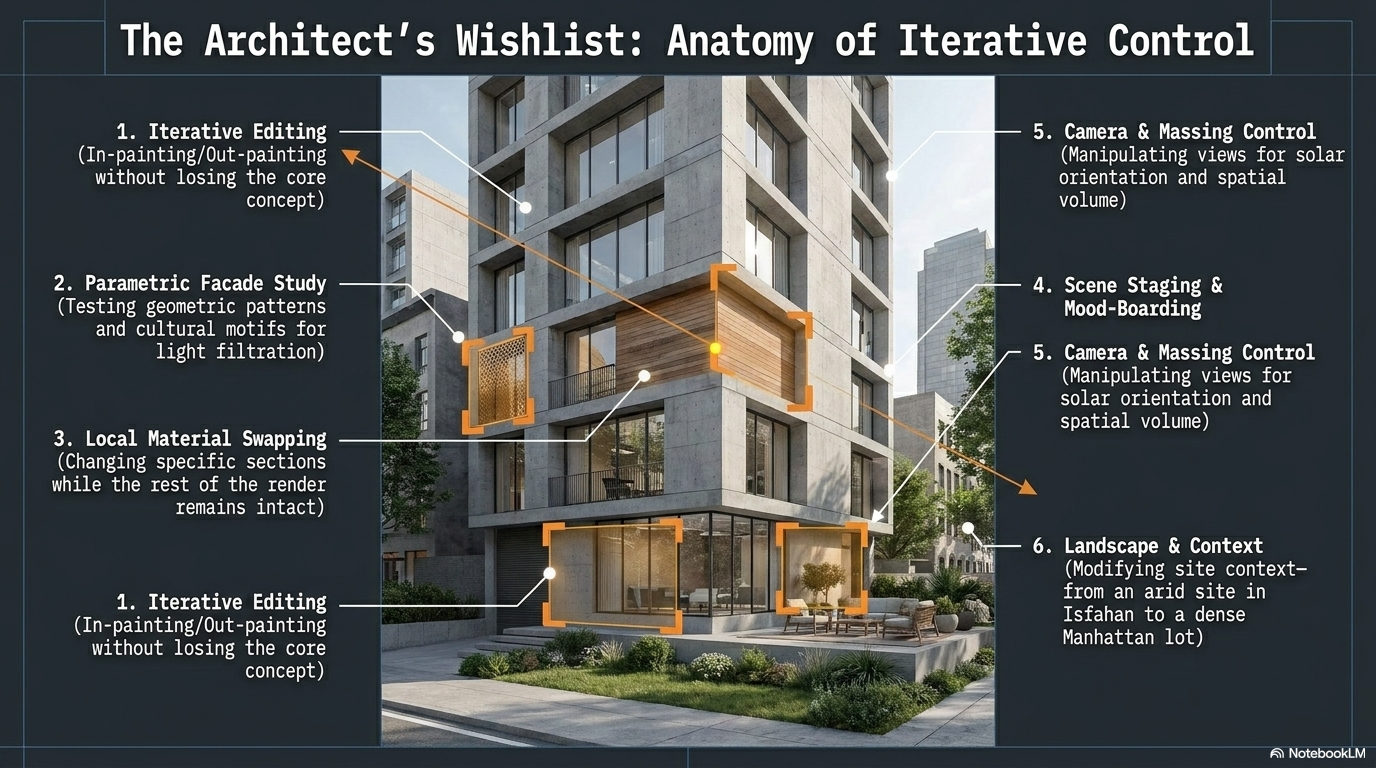
To move AI from a "toy" to a "tool," we require features that respect the iterative nature of design:
Iterative Editing: The ability to modify a generated image without losing the core concept (In-painting/Out-painting).
Parametric Facade Study: Injecting specific geometric patterns into a design to test light filtration and cultural motifs.
Local Material Swapping: Changing the material of a specific balcony or wall section while leaving the rest of the render intact.
Scene Staging & Mood-Boarding: Integrating specific FF&E (Furniture, Fixtures, and Equipment) lists directly from the visual.
Camera & Massing Control: Manipulating the viewpoint to investigate solar orientation and spatial volume from multiple angles.
Landscape & Context Integration: Modifying the site context, whether it's an arid site in Isfahan or a dense urban lot in Manhattan, with precision.
The Return to Core Skills: Text and Sketch
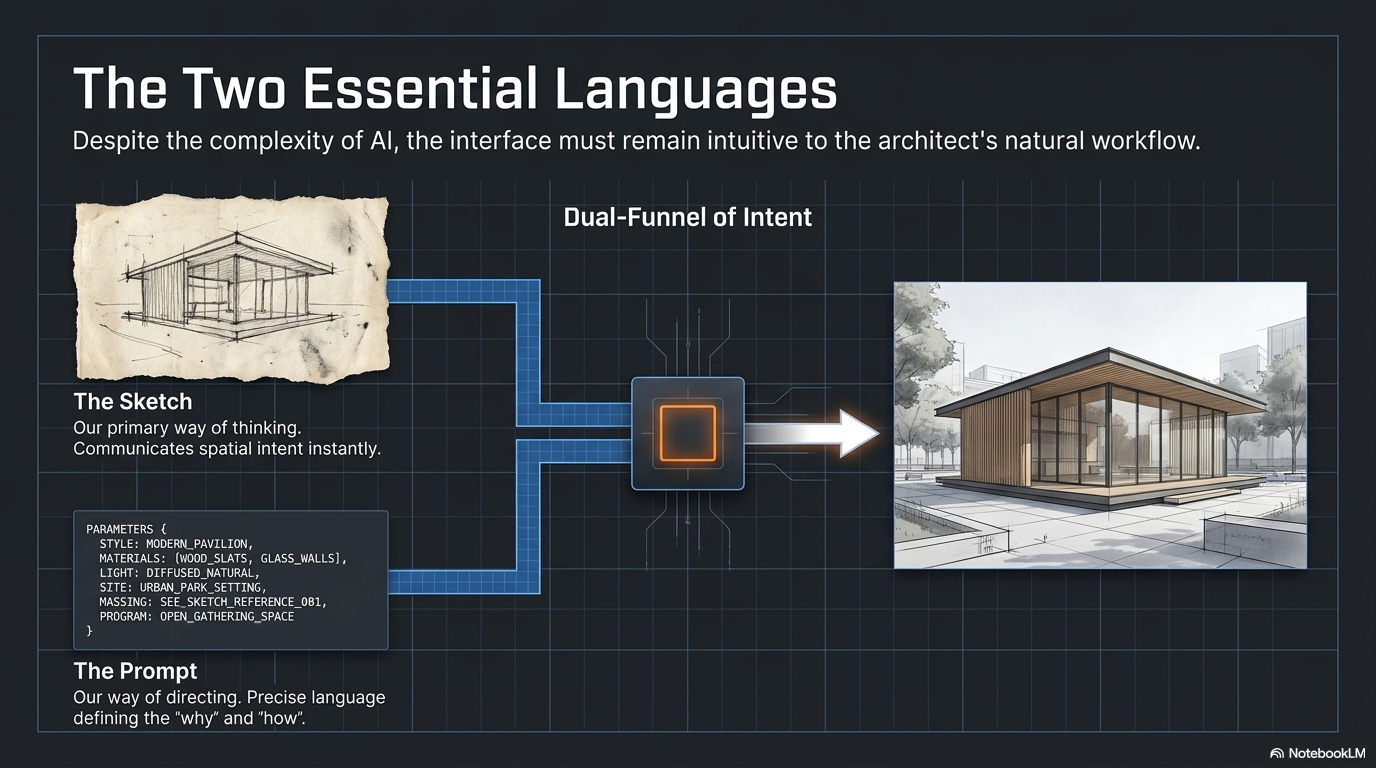
Despite the complexity of these features, the interface must remain intuitive. The only two languages an architect truly needs to master for AI are The Prompt (Text) and The Sketch. * The Sketch: Our primary way of thinking. An AI should take a rough hand-drawn massing and understand its spatial intent.
The Prompt: Our way of directing. Precise, scholarly language that defines the "why" and "how" of the design.
The Sketch: The Language of Synthesis - In the digital age, it is easy to mistake a 3D model for the starting point of design. However, the true foundation of architecture remains The Sketch. This isn't about being a "fine artist"; it is about the ability to translate abstract thoughts into spatial reality with nothing but a pen and a scrap of paper.
The Business Case: Why Advanced AI Matters
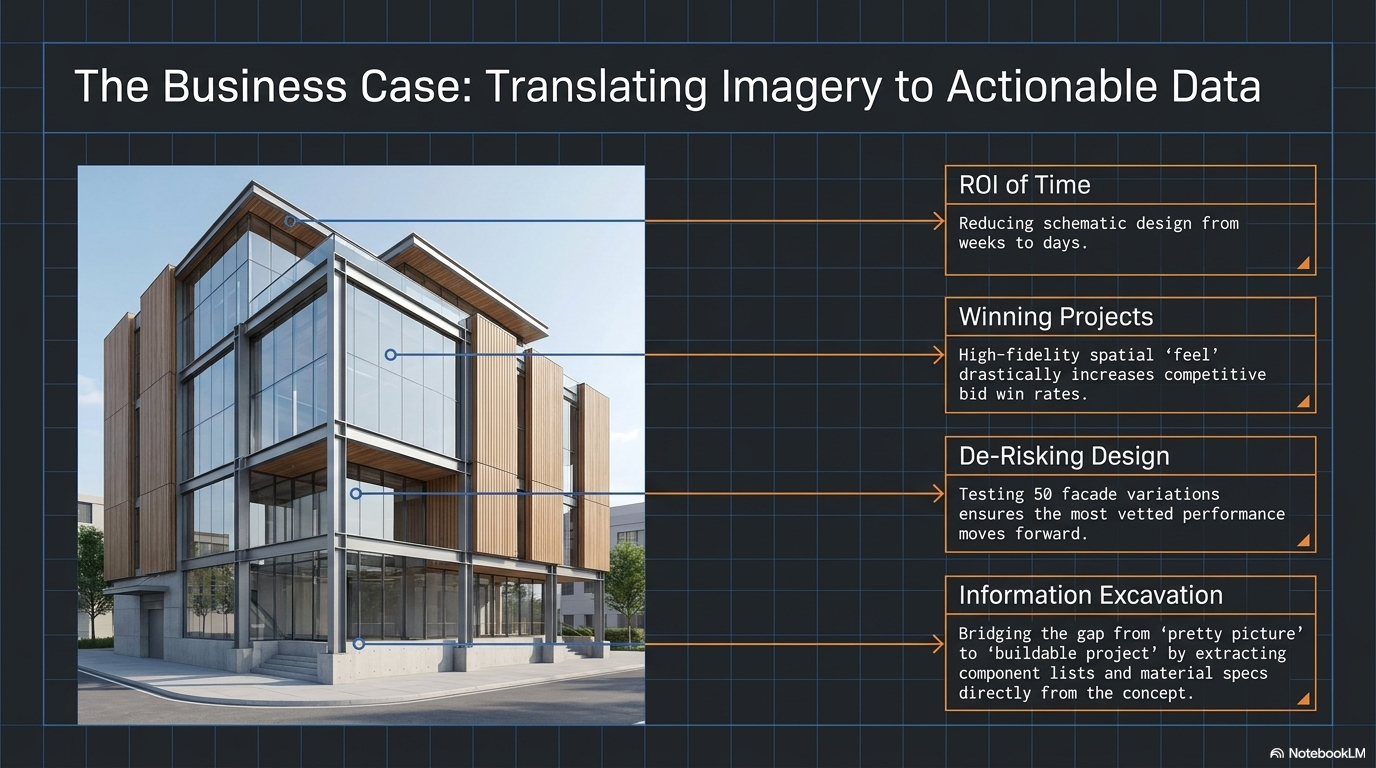
Integrating a tool that offers this level of control doesn't just make the design "cooler" it transforms the firm’s bottom line:
ROI of Time: Reducing the schematic design phase from weeks to days.
Winning Projects: High-fidelity, detailed presentations that allow clients to "feel" the space, increasing the win rate for competitive bids.
De-Risking Design: Being able to test 50 variations of a facade’s performance ensures the most "vetted" design moves forward.
Information Excavation: Generating component lists and material specs directly from conceptual images bridges the gap between a "pretty picture" and a buildable project.
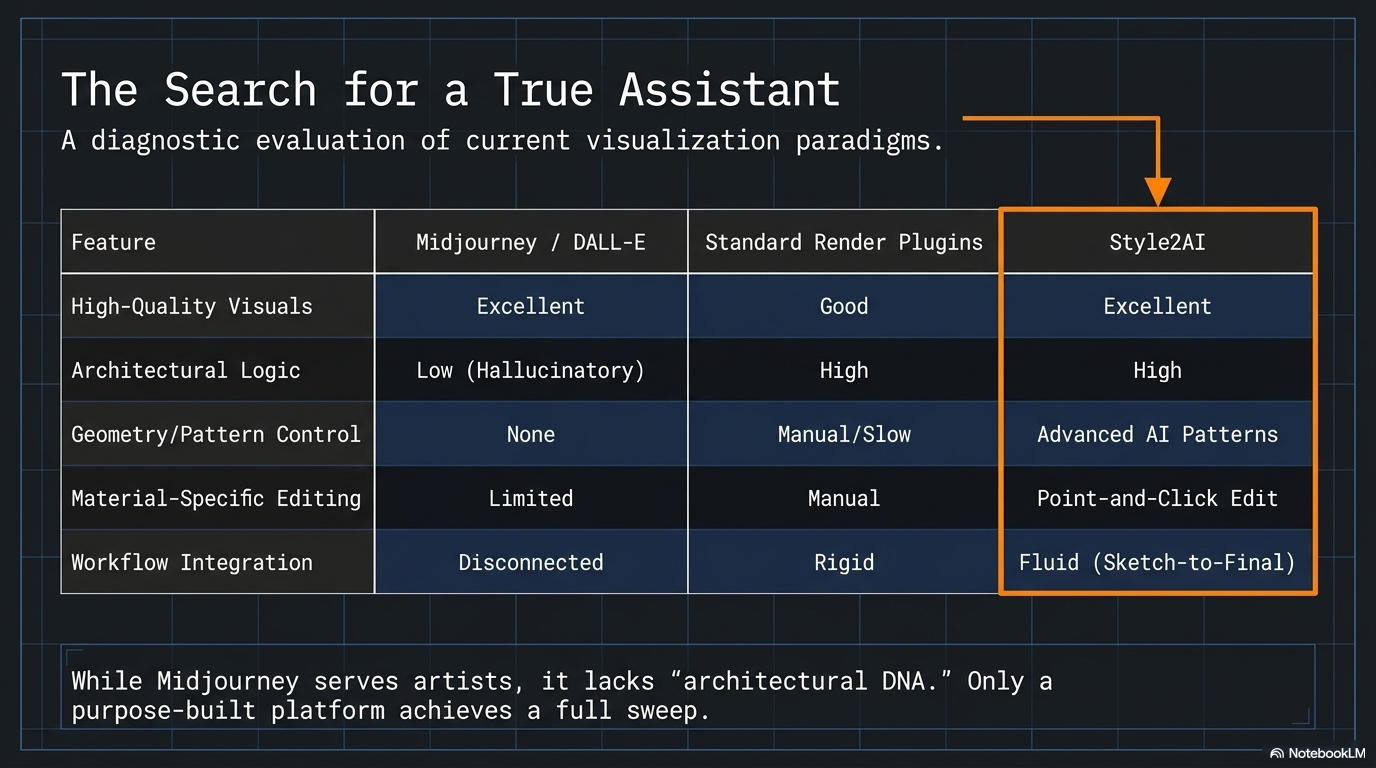
Market Comparison: The Search for a True Assistant
Why Style2AI Stands Out
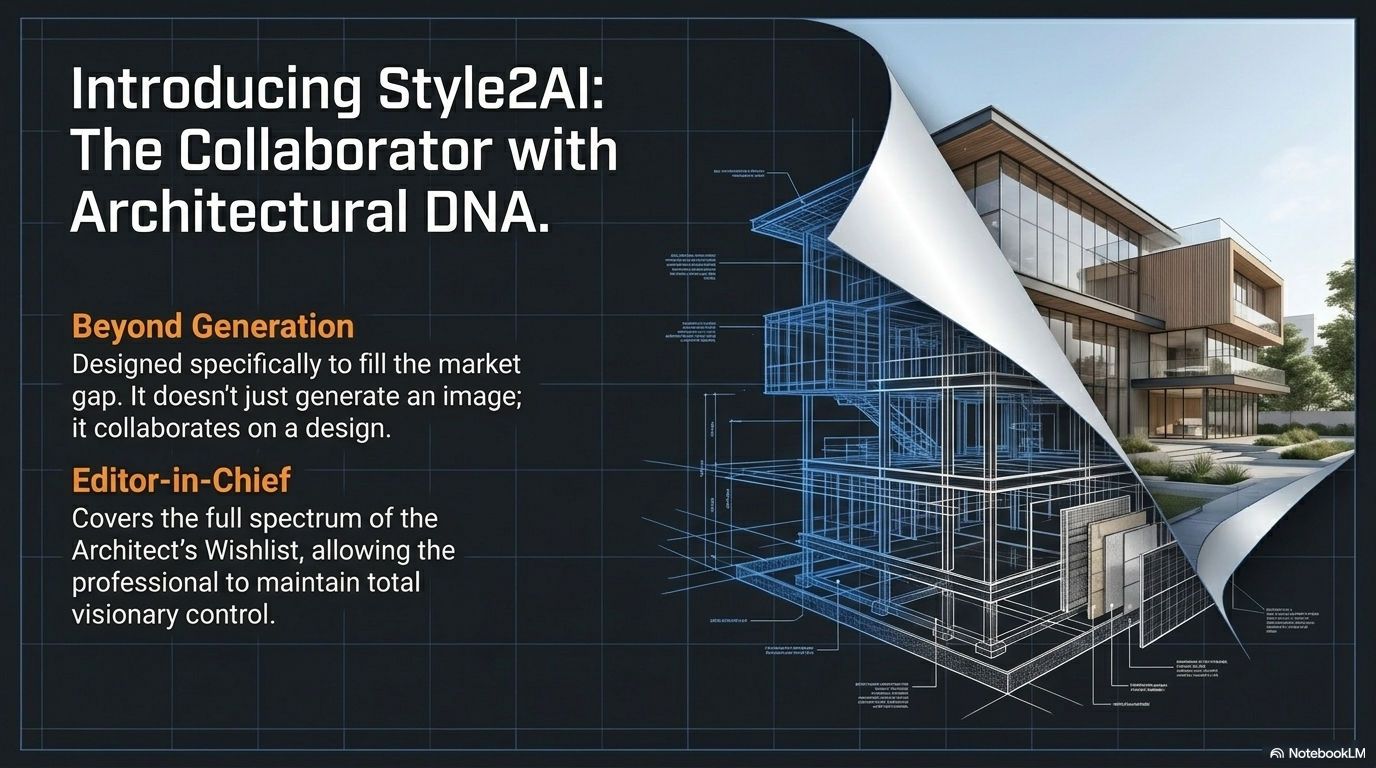
While tools like Midjourney are fantastic for artists, they lack the "architectural DNA" required for professional practice. Style2AI was designed specifically to fill the gaps identified above. It doesn't just generate; it collaborates.
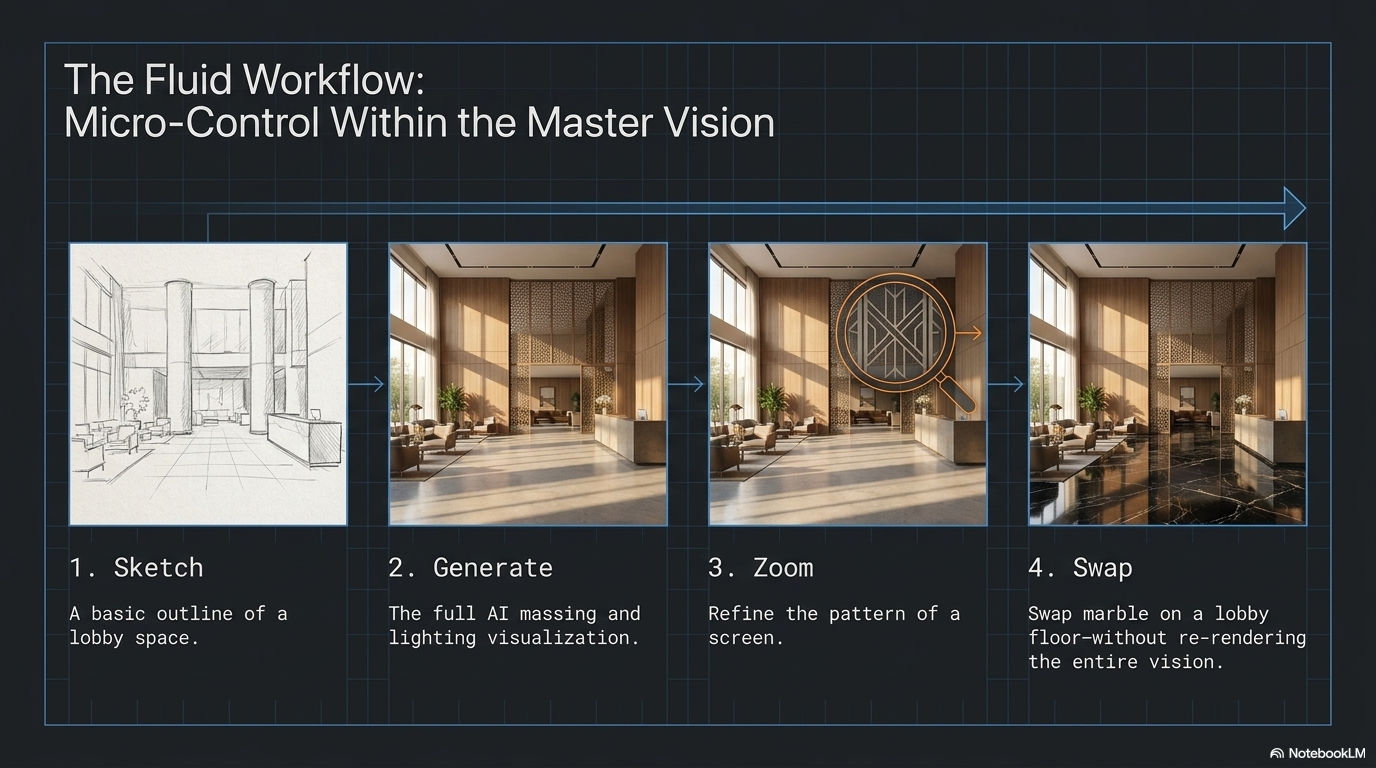
It understands that an architect might want to take a sketch, generate a massing, and then, critically, zoom in to refine the pattern of a screen or swap the marble on a lobby floor without re-rendering the entire vision. By covering the full spectrum of the "Architect’s Wishlist,"Style2AI allows us to maintain our role as the visionary "Editor-in-Chief" of our designs.
New Angle: The "Hybrid Practitioner"
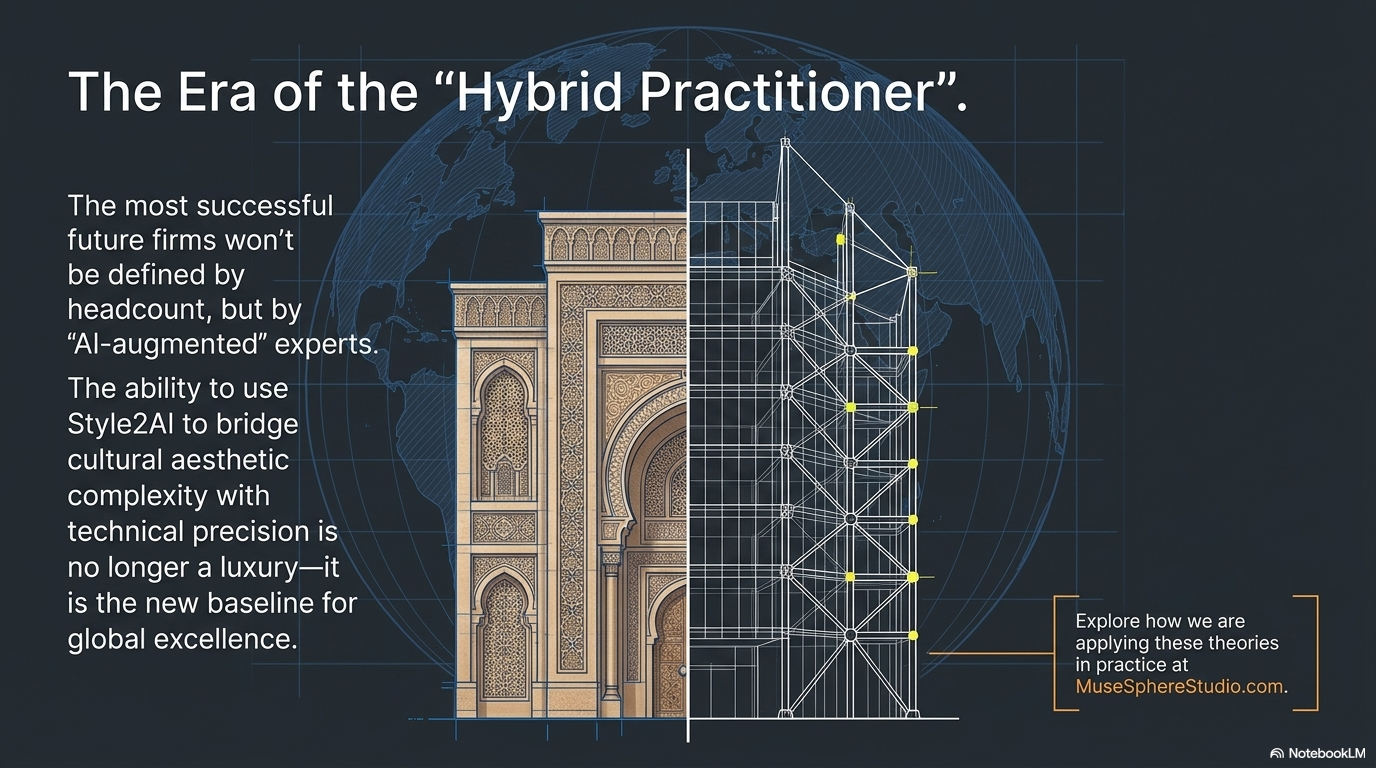
We are moving toward a "Hybrid" era where the most successful firms won't be those with the biggest teams, but those with the most "AI-augmented" experts. The ability to useStyle2AI to bridge aesthetic complexity with Western technical precision is no longer a luxury, it is the new standard of global excellence.
Explore how we are applying these theories atStyle2ai.com
End Notes & References:
Frampton, K. (1983). "Towards a Critical Regionalism." (Context for cultural bridging in AI).
Monograph (2026). "Best AI for Architecture: Top Tools in 2026."
D5 Render Analysis (2026). "AI Image Generators vs. Professional Rendering."
ArchiVinci (2025). "The Workflow Shift: From Manual Drafting to AI Co-Creation."