Why Global Standards Require a Local Soul in Iran: The Reconstruction Challenge
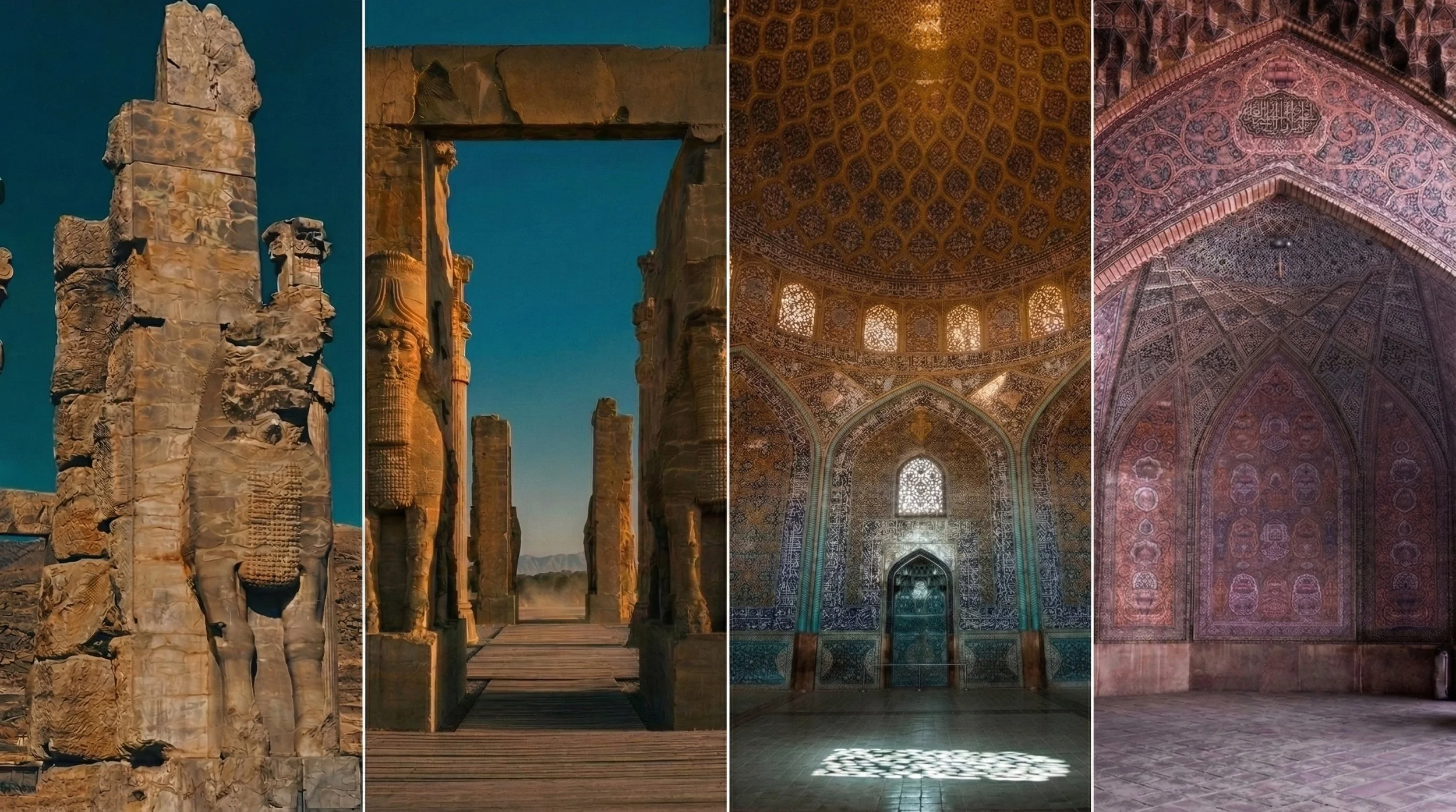
The DNA of Iranian Design This composition bridges millennia, from the monumental stone guardians of Persepolis to the celestial tilework and geometry of the Islamic era. In Iran, every brick and pattern is a deliberate word in a 3,000-year-old conversation. For any major development project to succeed, it must not only respect this heritage but actively "sync" its modern engineering with this enduring artistic soul.
When a major U.S. or European architectural firm signs a contract for a project in the Middle East, they arrive with suitcases full of "international standards." These are often the gold standards of efficiency, safety, and modern aesthetics. However, there is a recurring friction that begins almost immediately: the clash between a technical "standard" and a cultural "soul."
The Post-War Gold Mine: A Vision for Reconstruction
As regional conflicts resolve and the market in Iran begins to open, we are looking at a "gold mine" of opportunity for global development strategies. The drive to modernize missing infrastructure and rebuild urban centers will be immense, attracting a wave of elite U.S. and European design firms.
However, this influx of international talent brings a significant risk: a generic "International Style" could inadvertently erase the very heritage that makes Iran unique. For these firms to succeed—and for Iran to thrive—design cannot be treated as a mere export of Western engineering. It must be a partnership between 21st-century technology and 3,000 years of philosophy.
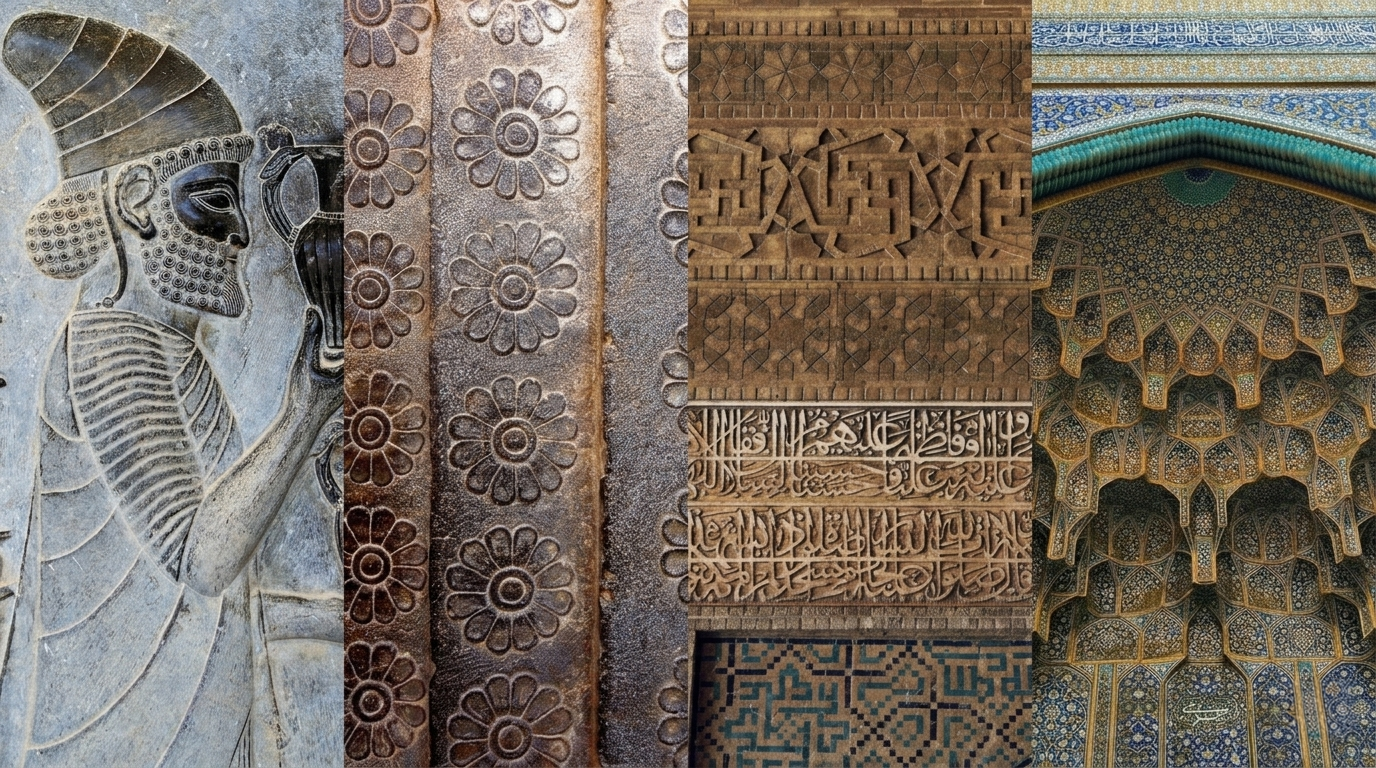
This visual timeline spans 3,000 years of Iranian design—from the monumental reliefs of Persepolis to the intricate Muqarnas of the Islamic era. For global firms, this is the benchmark. It proves that in Iran, architecture isn't just engineering; it is a sophisticated, living language of art and philosophy that any modern reconstruction must "sync" with to be successful.
Iran as the Exceptional Sample: A Living Legacy
Iran stands apart in the MENA region. Unlike neighbors that have focused on rapid, top-down urbanization, Iran is defined by a deep, continuous architectural continuum.
What makes the job exponentially harder for a foreign firm is that they are not just competing with history—they are competing with a highly sophisticated contemporary talent pool.
The Award-Winning "Iranian Language"
In the last two decades, Iranian architects have proven that their unique language is a global force. The weight of design in major Iranian projects is exceptionally high, as evidenced by a consistent dominance on the world stage:
Global Accolades: Iranian firms have recently dominated the Aga Khan Award for Architecture, the World Architecture Festival (WAF), and the A' Design Awards.
Recent Triumphs (2025): The Majara Residence by ZAV Architects and the Jahad Metro Plaza by KA Architecture Studio were both awarded the 2025 Aga Khan Award, proving that Iranian design is not just "traditional"—it is radical, experimental, and world-leading.
A "High-Design" Market: These awards prove that the local expectation for "Design" is far above the standard "Engineering" package typically offered by global firms.
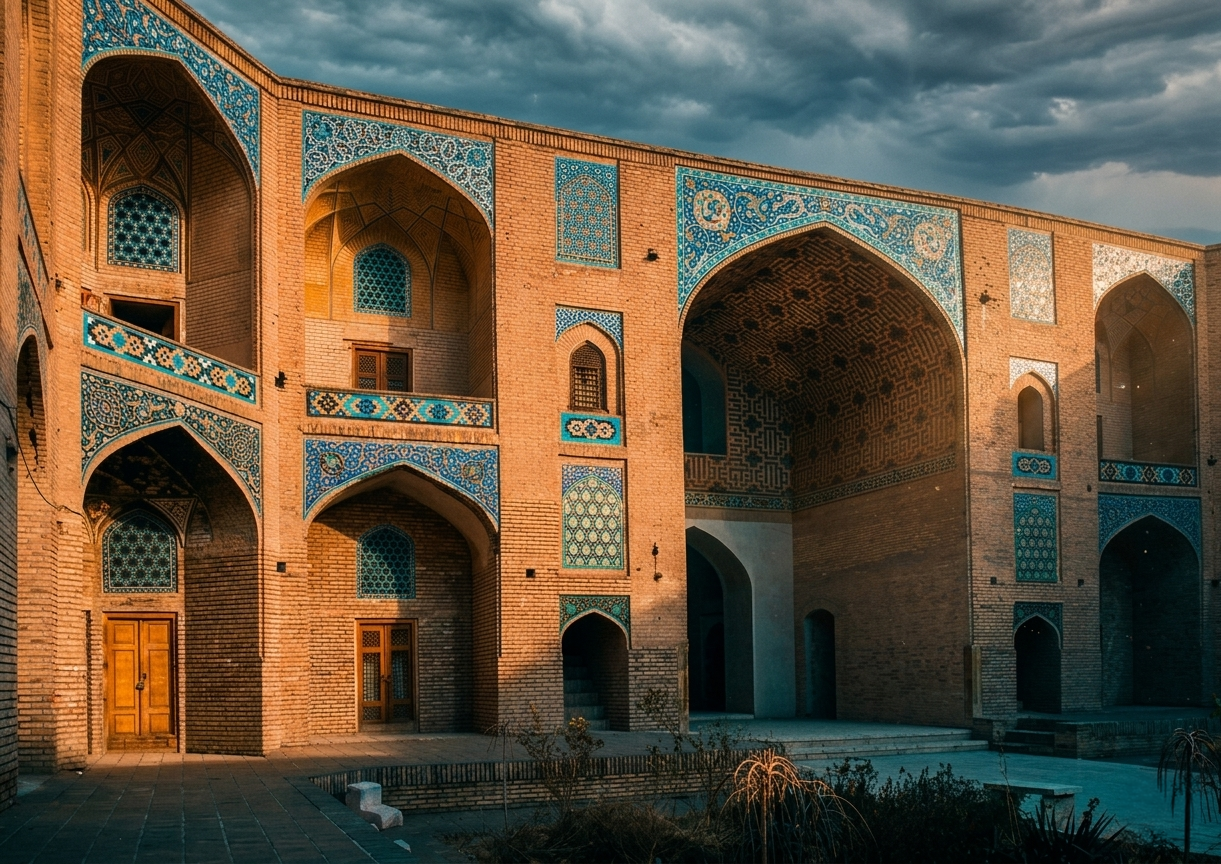
Ganj Ali Khan Karvansarai: The Original standard technical expertise meets ancient function. This structure is a profound example of the "Karvansarai" typology. The Ganj Ali Khan complex demonstrated sophistication in climate control, security, and public amenity over 400 years ago—technical standards that are often more advanced than generic international practices. Any successful reconstruction of the original standard must sync with this legacy.
Case Study: The 2,500-Year-Old "Standard"
A perfect example of this depth is found in hospitality. While the modern hotel is often seen as a Western export, Iran has been perfecting the Karvansara for 2,500 years.
Functionally & Technically: These were the ancient world's "luxury hotels," managing climate, security, and social gathering with a sophistication modern engineering is only now beginning to quantify.
The Expectation: A successful modern hotel in Iran must "sync" with this legacy to be accepted as a truly good design.
The Art vs. Engineering Divide
The core issue is the definition of the craft. In the West (especially the U.S.), architecture is often categorized under Engineering, where financial and technical aspects are dominant. In Iran, architecture is Art.
Every high-profile project is critiqued through an artistic and philosophical lens. A building that is technically perfect but artistically "hollow" will be rejected. International firms must shift their mindset: they must provide 21st-century engineering that serves a 1st-century soul.
The Strategic Necessity: A National Design Standard
To prevent the dilution of Iranian identity, it is crucial that Iranian organizations establish a country-wide, meaningful Design Standard. This should not be a private handbook, but a national benchmark to:
Sync Visions Instantly: Provide immediate cultural "onboarding" so U.S./EU firms don't spend years making basic cultural mistakes.
Educate Foreign Talent: Distill the history of Iranian art and technology into actionable design principles.
Ensure Artistic Integrity: Mandating that all infrastructure—whether a mall, an apartment, or a bridge—adheres to the artistic values of the country.
The Conclusion
The reconstruction of Iran will be one of the greatest architectural challenges of the century. Success will not be measured by how many glass towers are built, but by how well those towers "speak" Persian. For the international designer, the path is clear: learn the history, respect the art, and bridge the gap between Western technology and the Iranian soul.
Key Takeaways for International Firms
Design as Art: Prioritize philosophical depth over mere programmatic efficiency.
Leverage AI Copilots: To bridge the cultural gap quickly, utilize tools likeStyle2ai, a specialized design copilot that helps architects navigate complex aesthetics and heritage values in real-time.
Sync with Heritage: Research the Karvansara and the Iranian "House" as technical frameworks, not just historical references.
For more insights on the intersection of heritage and modern development, visit musespherestudio.com
Iranian Architecture Heritage, Post-War Reconstruction Iran, Western Architecture Standards vs Middle East, Aga Khan Award Winners Iran, Architecture Design Art vs Engineering.
Karvansara design, Iranian House philosophy, International Design Firms in MENA, Style2ai design copilot.
Explore why Western design standards often fall short in Iran's rich architectural landscape and why a national design standard is vital for the upcoming post-war reconstruction "gold mine."