The Architect’s Gambit: When Capital Overwhelms Culture in the Modern Casino-Hotel
By Architecture Atelier
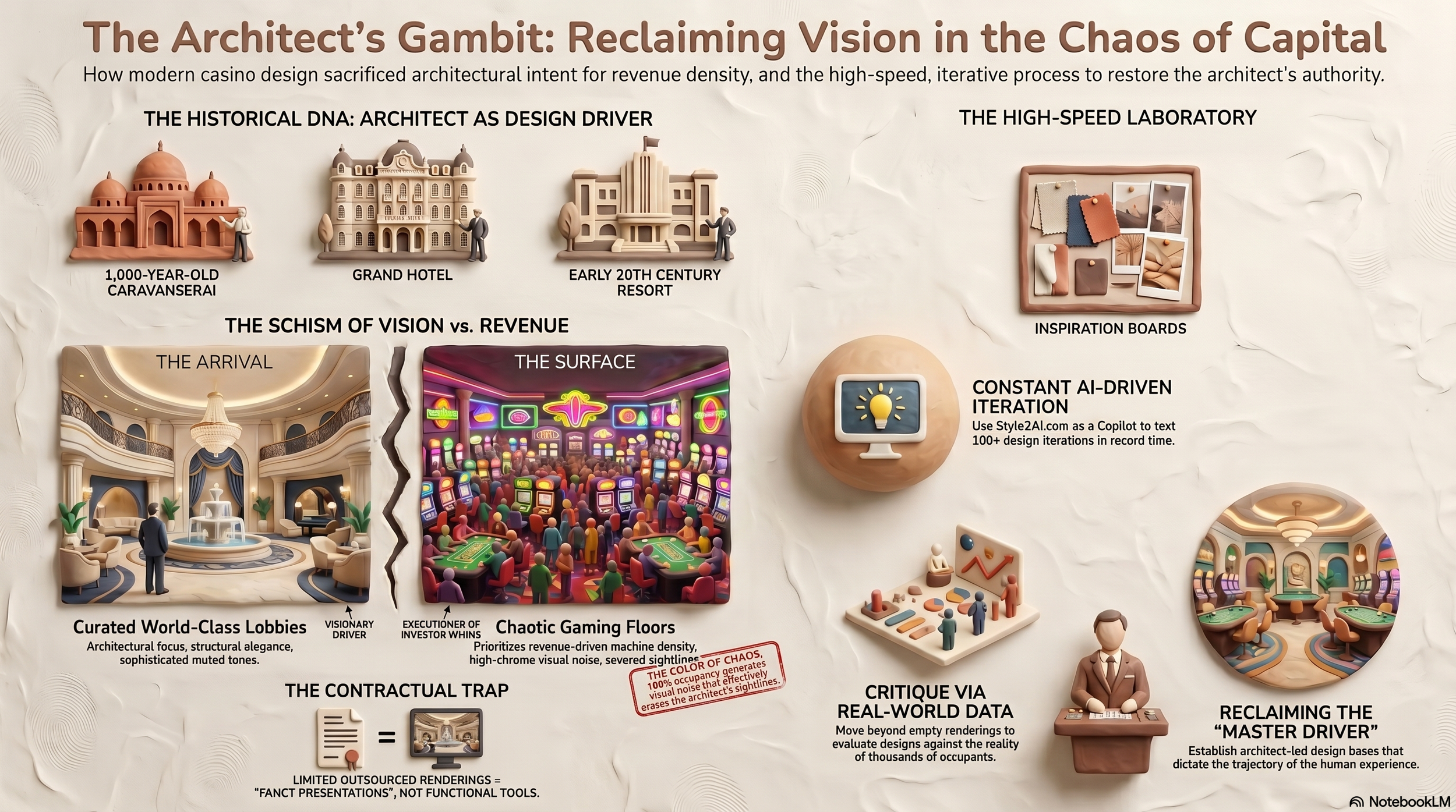
The history of hospitality architecture is fundamentally a history of evolution. For centuries, the "inn" served as a foundational typology, evolving through a rigorous dialogue between function, climate, and the architect’s vision. This lineage finds its DNA in the caravanserais—structures with over a millennium of history that perfected the art of the traveler’s rest. From the intricate geometric logic of these ancient waystations to the grand structural elegance of the 20th-century Western grand hotel, architects have historically acted as the "design drivers."
In my over 25 years of practice across both the Middle East and the United States, I have observed that we, as architects, once defined the standards. We ensured that a building was not merely a container for profit, but a coherent piece of the human experience. However, we are witnessing a shift. When the financial aspect of a project—particularly in the gaming and casino sector—is weighted significantly more than structure, philosophy, or aesthetics, we must ask: Who is truly holding the pen?
The Chaos of the "Everything Everywhere" Aesthetic
This is not to say that "good design" is absent from the gaming world. Many global brands have invested heavily in creating world-class entry lobbies, concierge areas, and reception halls that are masterpieces of architectural focus. However, even these top-tier establishments are not immune to critique.
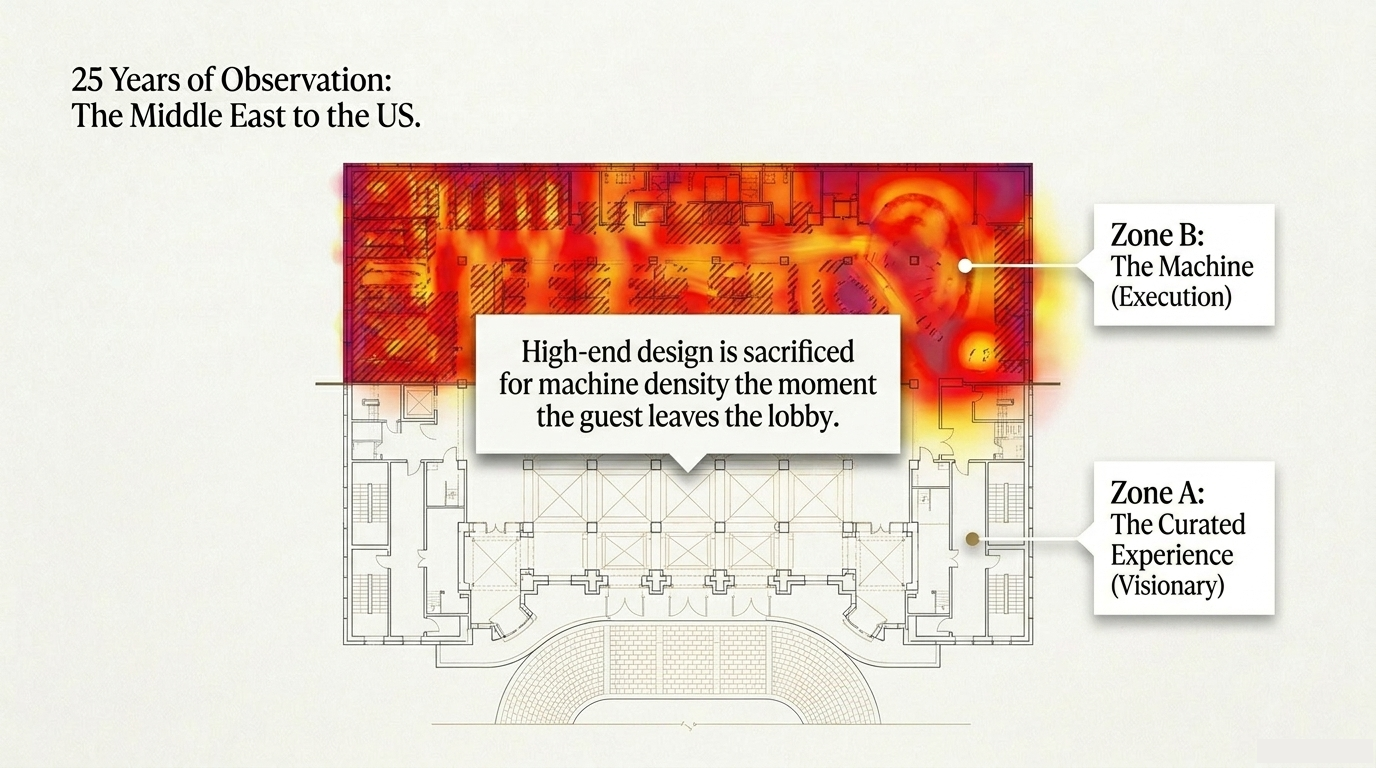
A visible schism exists within these buildings: the "arrival experience" is a curated architectural statement, while the actual gaming surfaces—the heart of the machine—are heavily influenced by a singular strategy: maximizing revenue. In these zones, the architect’s role often shifts from visionary to executor, sacrificing aesthetic cohesion to satisfy a non-architectural mindset that has become the established industry standard.
A New Angle: The Color of Chaos
I want to propose a perspective often missed in the design of these mega-projects: The Scale and Visual Density of the Crowd. We often forget that these spaces are not empty renderings; they are inhabited by thousands of people, diverse in dress, color, and movement.
From a design perspective, these people are not just occupants; they are visual obstacles. Consider the reality of a busy casino floor:
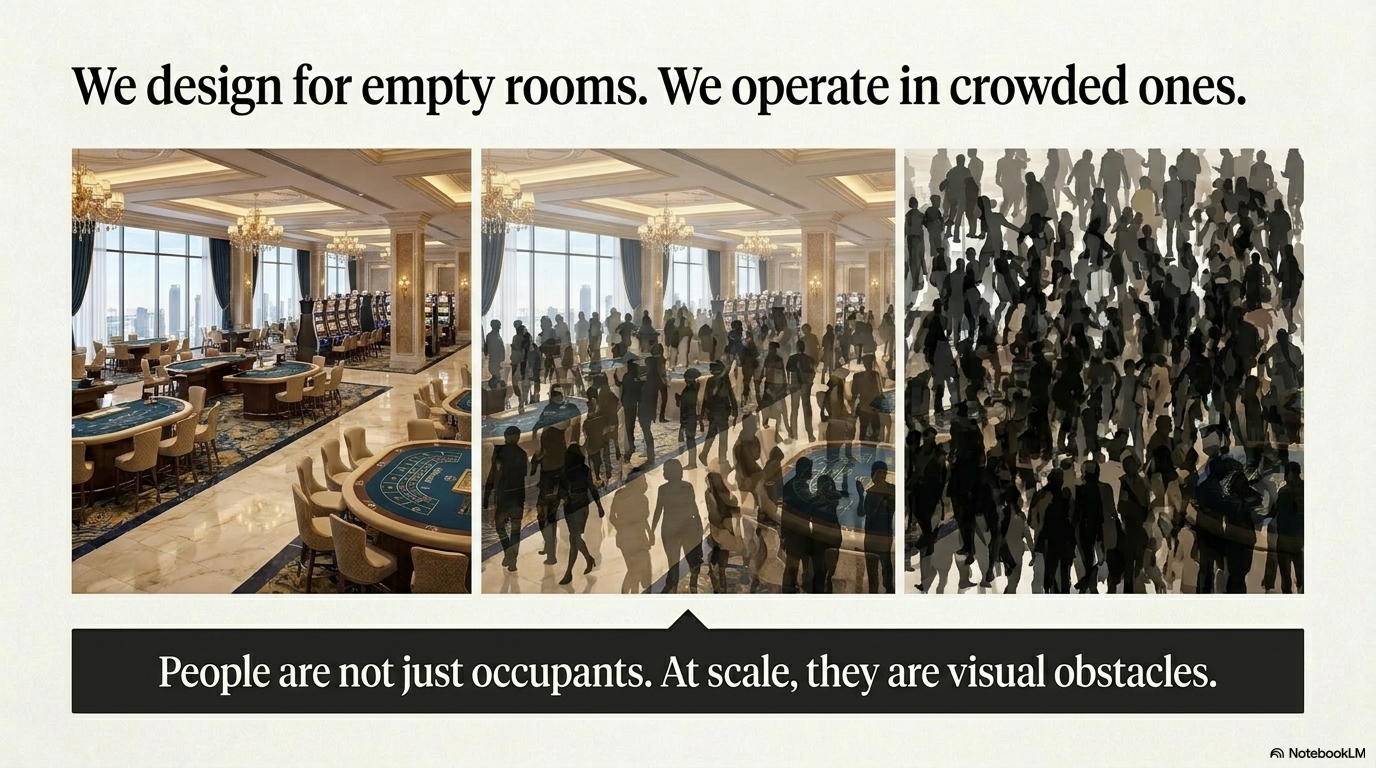
When we extract the actual color palette of a populated gaming floor, we see a harsh reality. The sophisticated, muted palettes that designers spend months perfecting are completely overwhelmed by a "visual noise" of clashing colors and moving masses. The aesthetic the architect intended is effectively erased, replaced by a "human wall" that severs sightlines. If the final visual result bears no resemblance to the designer's intent, we must admit that the influence of non-architects—those focusing purely on machine density—has disrupted the fundamental integrity of the space.
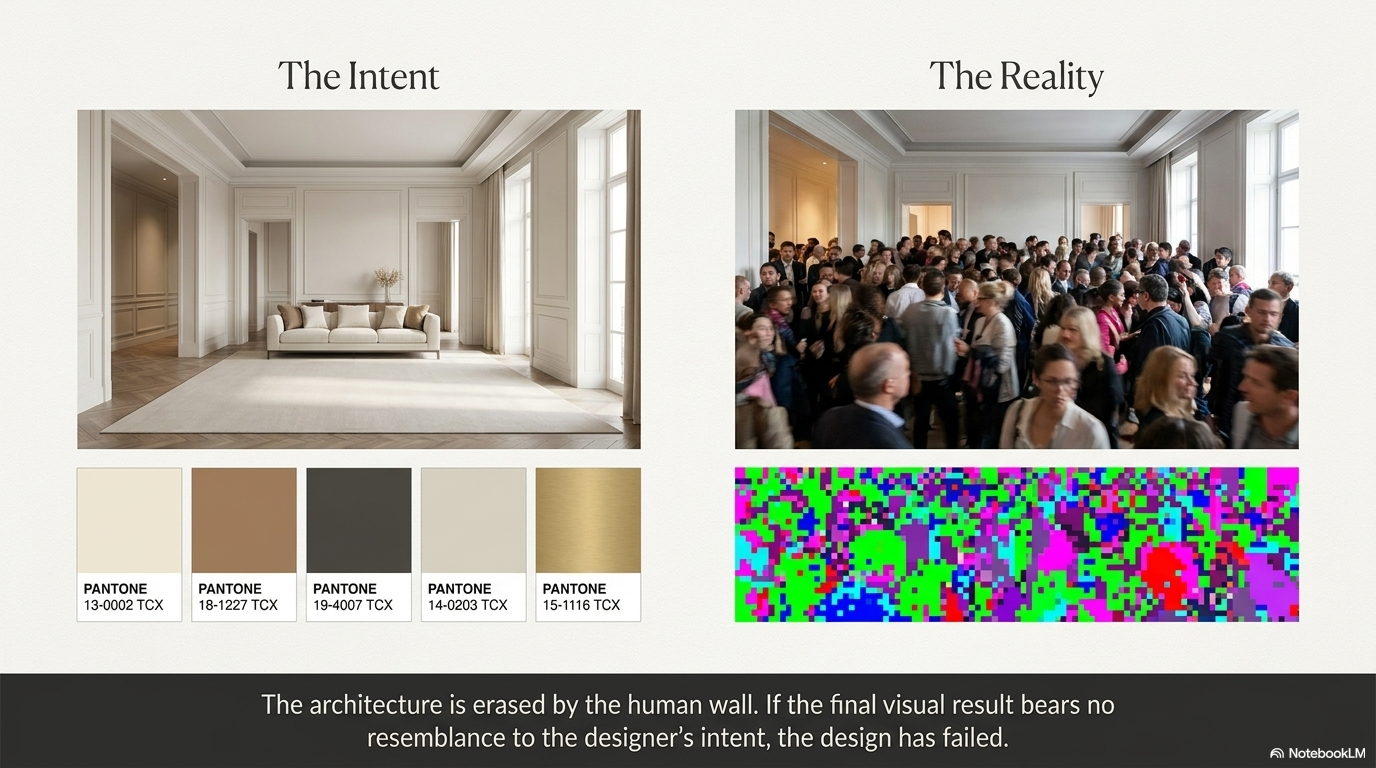

Original image of a casino in Las Vegas
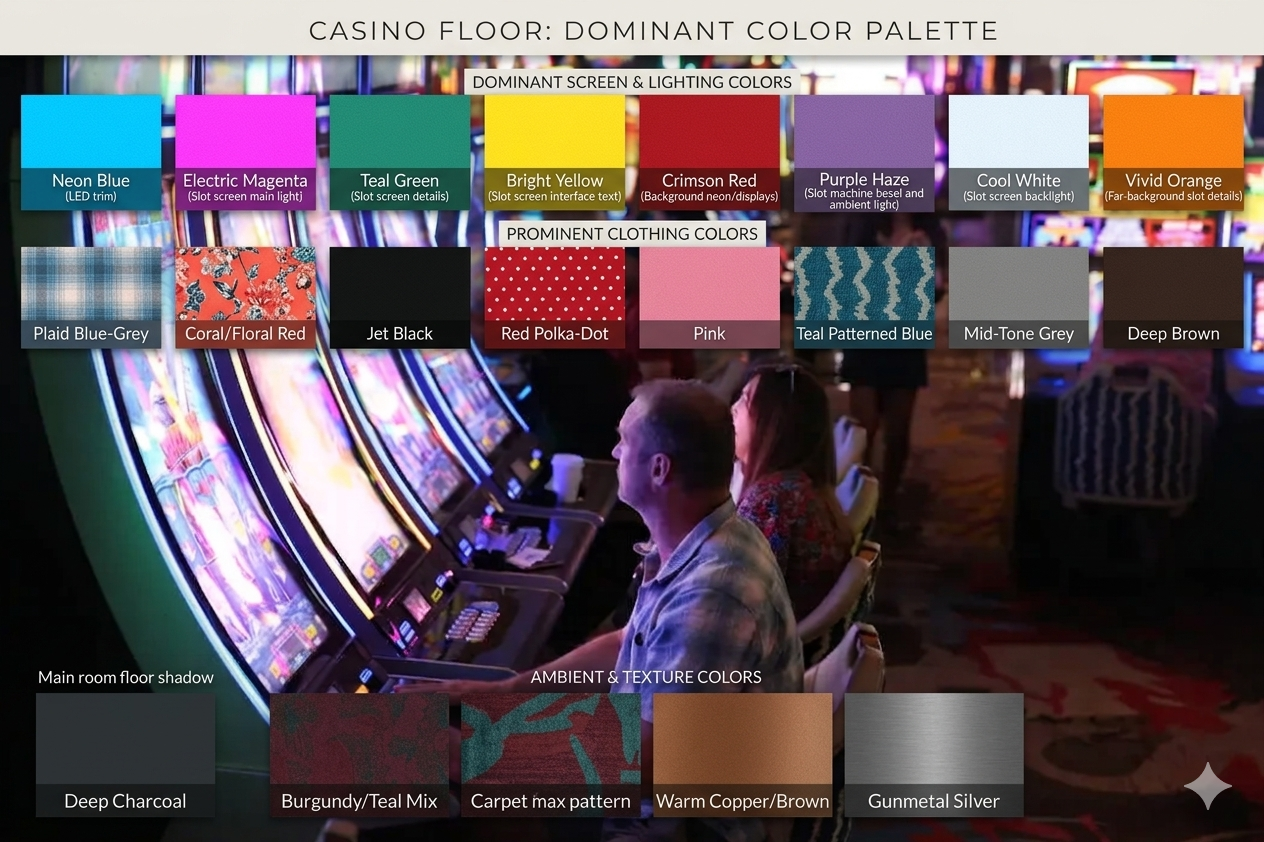
This image provides a forensic look at the "Visual Noise" inherent in high-density gaming environments. While the architect’s intended palette—often composed of sophisticated, neutral tones—is designed for elegance and spatial clarity, the operational reality is a "mash" of chaotic pigments.
The extraction on the left highlights the sheer dissonance created by the presence of a diverse crowd: a clashing mixture of high-chroma clothing, skin tones, and fluctuating machine lighting. This chromatic saturation creates a "human wall" that effectively erases the intended architectural trajectory, turning a curated space into an unplanned, aesthetic failure. This visualization proves why we must move beyond "white model" renders and begin testing our designs against the dense, colorful reality of 100% occupancy during the concept phase.
Reclaiming the "Master Driver" Role: Beyond the Contractual Rendering
How do we bring the architect back to the driver’s seat? It begins with a fundamental change in our workflow. Currently, many firms are limited to a cycle of inspiration boards, pattern selections, and a handful of outsourced renderings. Even the "big names" in interior design often rely on beautiful white-model renders or hand drawings. While these are excellent for defining a "vision," they fail to account for the operational reality.
Because high-end renderings are traditionally slow and expensive, they are often limited to the specific number signed in a contract. This is where the problem starts. We are limiting our ability to visualize the design 100 times over during the process.
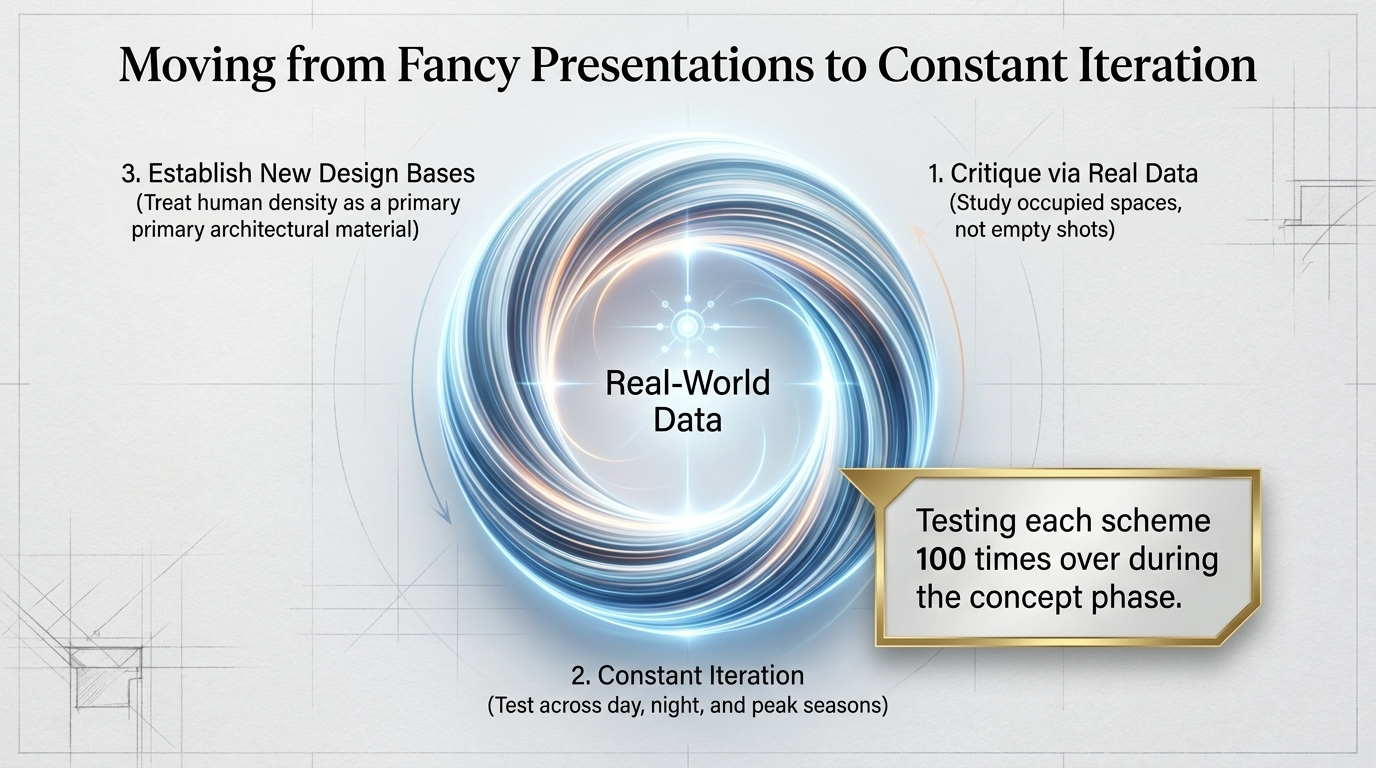
To mitigate the negative impact of the crowd, we must move away from evaluating "drawings" and start evaluating "realities." We need to:
Critique via Real-World Data: Study actual photos of occupied spaces rather than pristine, empty architectural shots.
Constant Iteration: Test each design scheme through high-end visualizations that show the presence of people at different times of the day and year.
Establish New Standards: Create architect-led "design bases" that account for human density as a primary material, ensuring our decisions remain accurate and aesthetically sound even when the room is at 100% capacity.
This is where the "High-Speed Laboratory" approach becomes vital. When visualization is no longer a "fancy presentation" limited by a contract, but a tool used daily, we can reclaim our authority. Tools powered by AI, like Style2AI.com are beginning to facilitate this shift, acting as a "Design Assistant" that allows us to test 100 iterations in the time it used to take to produce one.
Toward a New Dialogue
The Las Vegas Strip is a marvel of engineering, yet it often lacks the artistic value that hospitality has spent centuries cultivating. By embracing a more rigorous testing process and utilizing the curated vision of platforms we can move away from the "failed loop" of copying past projects.
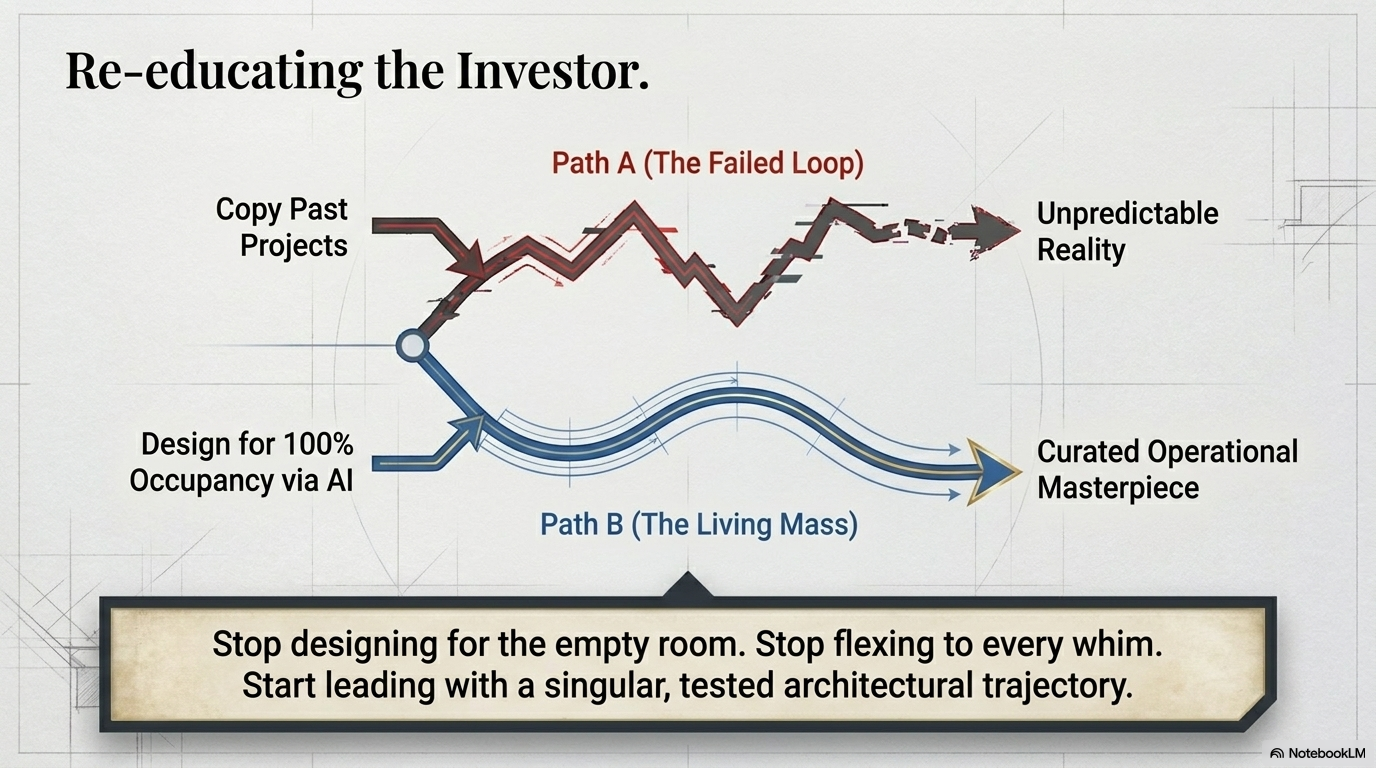
We must stop designing for the empty room and start designing for the living, moving mass. It is time we stop "flexing" to every investor whim and start re-educating them on the power of a singular, tested architectural trajectory.
End Notes & References
Venturi, R., Scott Brown, D., & Izenour, S. (1972).Learning from Las Vegas. MIT Press. (A foundational text requiring a modern re-evaluation in the context of hyper-density).
Pallasmaa, J. (2005).The Eyes of the Skin: Architecture and the Senses. Wiley. (Essential reading on how architecture must address the senses when sightlines are obscured).
Architecture Atelier Research.The Impact of Occupant Visual Noise on Interior Color Theory in Gaming Environments.
Cullen, G. (1961).The Concise Townscape. (Relevant for his theories on "Serial Vision").